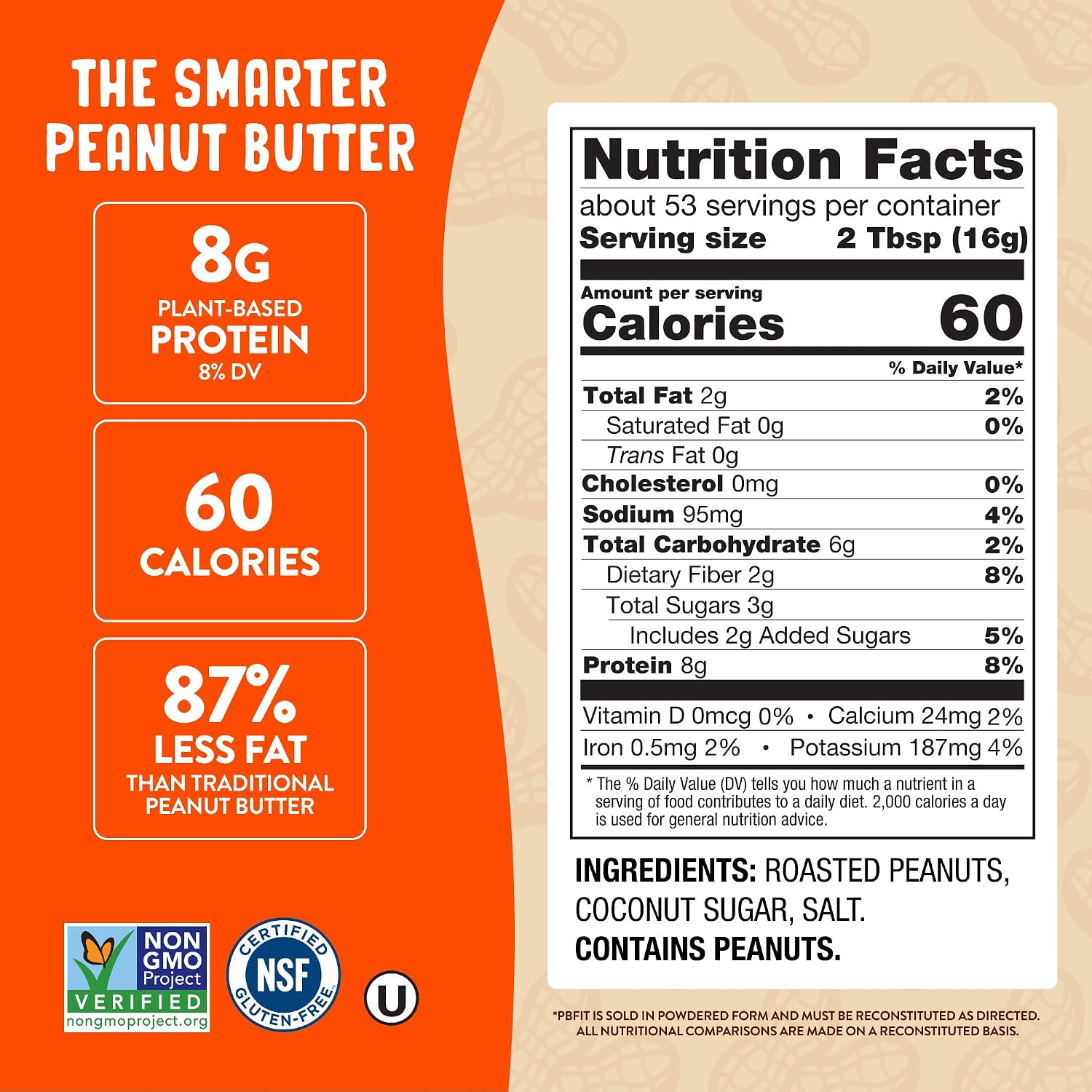
Powdered nut butter is exactly what it sounds like: a jar of roasted nuts that has been pressed to remove most of the oil, then dried and milled into a fine powder. You stir it back with water (usually two tablespoons of powder to one tablespoon of water) and get something that spreads roughly like a conventional nut butter — same roasted flavor, significantly less fat. The category has grown beyond peanut into almond, cashew, and blended “protein spread” formats that add whey, pea protein, or collagen. If you’re evaluating these products for your own pantry, for a cottage food line, or for a specialty retail assortment, the labels can look impressive or deceptive depending on how you read the serving-size math. This guide unpacks exactly that math so you’re making apples-to-apples comparisons instead of getting fooled by a number that sounds good.
Why the Serving Size Is the First Number to Challenge
Every comparison between powdered and conventional nut butter falls apart if you don’t standardize the serving size first — and manufacturers know it.
A standard two-tablespoon serving of conventional peanut butter contains roughly 190 calories and 16 grams of fat, per USDA FoodData Central’s standard reference for smooth peanut butter without salt. A two-tablespoon serving of powdered peanut butter contains about 45–50 calories and 1.5 grams of fat. Those numbers are technically true, but they’re not equivalent portions. Two tablespoons of powder reconstitutes to roughly the same volume as one tablespoon of conventional butter — not two. When Healthline’s overview of powdered peanut butter notes this reconstitution ratio, it’s making the critical point that a fair comparison should weigh two tablespoons of reconstituted powder against two tablespoons of conventional butter, which roughly doubles the calorie count for the powder to around 90–100 calories.
That’s still a meaningful calorie reduction — about 45–50% fewer calories, not 75% as the raw powder numbers imply. If you’re building a product or formulating a recipe around a “reduced calorie” claim, the FDA’s Food Labeling Guide (Chapter 7: Nutrient Content Claims) requires that “reduced” mean at least 25% fewer calories than the reference food per comparable serving. Powdered nut butters clear that threshold comfortably on a reconstituted basis, but your serving-size definition in labeling must hold up to that standard if you’re commercializing.
Decision frame: If you’re buying for personal use, the calorie story is real but smaller than advertised. If you’re sourcing for a product line, run your label math on the reconstituted weight, not the powder weight, or your claims won’t survive an FDA review.
Protein Claims: What “High Protein” Actually Delivers
The second number that generates confusion — especially in the newer “protein spread” category — is the protein figure.
A two-tablespoon serving of powdered peanut butter provides about 5–6 grams of protein, which is roughly comparable to conventional peanut butter’s 7–8 grams for a true equivalent serving. The powder is not dramatically higher in protein; it’s just more concentrated per gram of powder because the fat has been removed. Serious Eats’ culinary analysis of powdered peanut butter makes this point cleanly: what you’re buying is, in effect, a leaner caloric profile, not a protein supplement.
The “protein spread” products — think formats that blend nut powder with added whey isolate or pea protein — are a different category entirely. These can legitimately reach 10–15 grams of protein per two-tablespoon reconstituted serving, which puts them closer to Greek yogurt territory than to traditional nut butter. But the tradeoffs show up elsewhere on the label:
By the numbers — typical two-tablespoon reconstituted comparison (approximate, per published specs):
| Format | Calories | Fat (g) | Protein (g) | Sugar (g) |
|---|---|---|---|---|
| Conventional peanut butter | 190 | 16 | 8 | 3 |
| Powdered peanut butter (reconstituted) | 95 | 3 | 6 | 1 |
| Protein spread (powder + whey blend) | 80–110 | 2–4 | 10–15 | 2–5 |
The protein spread format frequently adds sweeteners — both to mask the chalky off-note of isolated protein and to improve texture. Bon Appétit’s market overview of nut butters notes that added sweeteners are among the most common differentiators between “natural” and “enhanced” spreads. If you’re adding these to a product line targeting clean-label consumers, the sweetener entry on the ingredient list can be a harder sell than the protein gain is a draw.
Decision frame: Powdered peanut butter is a lower-fat, moderately lower-calorie alternative to conventional — not a protein upgrade. Protein spreads are a legitimate high-protein format, but they carry sweetener and additive baggage you’ll need to evaluate against your target consumer’s label expectations.
Fat Removal: What You Lose Beyond Calories
Removing the oil from a nut changes more than the calorie count. This is the part of the label that no nutrition facts panel will tell you directly.
Conventional nut butters deliver most of their nutritional value through fat-soluble micronutrients and beneficial fatty acid profiles. Peanuts, almonds, and cashews all carry meaningful quantities of vitamin E, a fat-soluble antioxidant, as well as monounsaturated fats that have well-documented cardiovascular associations. When you press and discard the oil — which is what the defatting process does — you retain the protein and fiber, but you remove a significant portion of the fat-soluble nutrient payload. Healthline’s overview of powdered peanut butter acknowledges this directly: the product is nutritionally leaner in ways that matter beyond calories, particularly for consumers who rely on nut butters as a fat-quality vehicle rather than simply a protein source.
For pantry buyers, this tradeoff is manageable: you’re likely getting healthy fats elsewhere in your diet. For a product formulator or specialty food entrepreneur positioning powdered nut butter as a “better for you” alternative, it’s worth being precise in your marketing language. Claiming superior nutrition broadly can create regulatory and consumer-trust problems if the product is simply lower-fat, not nutritionally superior across the board.
There’s also a functional consideration that matters for food professionals: powdered nut butters reconstituted with water behave differently in baking and cooking than oil-emulsified conventional butters. The absence of fat changes how a cookie spreads, how a sauce emulsifies, and how a filling sets. Serious Eats’ culinary analysis specifically flags that powdered peanut butter works well in smoothies and yogurt where water-binding is neutral, but underperforms in fat-dependent baking applications without supplemental oil added.
Decision frame: If the use case is stirred into liquids, sprinkled on oatmeal, or blended into shakes, the defatted format works without adjustment. If the use case involves baking, sautéing, or emulsifying into a sauce, you’ll need to reintroduce fat — at which point the calorie advantage narrows or disappears.
Reading Ingredient Lists: The Additives That Change the Value Equation
Once you’ve sorted the macronutrient math, the ingredient list is where real differentiation happens — particularly at the premium and commercial tiers.
The cleanest powdered nut butters on the market carry one or two ingredients: roasted peanuts (or almonds, cashews) and salt. That’s it. As soon as you see maltodextrin, corn syrup solids, or a long chain of stabilizers, you’re in a different product category — one optimized for reconstitution speed and texture rather than ingredient integrity. For a specialty food startup or a cottage food operator building a premium positioning, sourcing a clean-label powder matters both for your own label compliance and for the story you tell retail buyers.
The protein spread formats almost universally introduce a longer ingredient deck. Whey isolate or pea protein concentrate typically appear second or third, followed by a sweetener (often coconut sugar, monk fruit, or erythritol in “natural” variants), an emulsifier (sunflower lecithin is the most common), and sometimes a stabilizing gum. None of these are harmful, but they move the product away from “nut butter” and toward “engineered food.” That positioning shift affects where the product lives on a retail shelf, which influencer audiences respond to it, and what certifications (non-GMO, Paleo, vegan) are achievable.
Four quick signals that a powdered nut butter label is worth the price premium:
- Ingredient count of two or fewer (nut + salt)
- No maltodextrin or corn syrup solids
- Origin specificity — a named growing region or variety signals craft-level sourcing
- Third-party certification (organic, non-GMO Project) that has been audited rather than self-declared
Shelf Life and Storage: The Practical Advantage That’s Often Underrated
One legitimate advantage powdered nut butters hold over conventional that rarely appears on the label: shelf stability.
Conventional nut butters, especially natural-style products with no hydrogenated oils, carry oils prone to oxidative rancidity. A quality natural almond butter opened and stored at room temperature may have three to four months of peak quality before off-notes develop. Powdered formats, with the bulk of their oil removed, extend that window dramatically — typically 12 to 24 months unopened, and four to six months after opening if kept dry and sealed.
For a small-batch commercial operator managing inventory turns or a pantry curator buying in bulk from sources like Nuts.com or Thrive Market, this shelf-life differential has real economic value. It reduces waste, simplifies procurement timing, and allows opportunistic bulk purchasing without quality risk. If you’re running a cottage food operation with irregular production cycles, a powdered nut base that doesn’t go rancid mid-batch is a genuine operational advantage over a natural butter with a three-month clock.
If X, Then Y: The Decision Rules
After working through the label math, here’s where that analysis lands as actionable guidance:
If you’re buying for personal use and the goal is calorie reduction: Powdered peanut butter delivers a real — if smaller than advertised — reduction on a reconstituted basis. Expect roughly 45–50% fewer calories than conventional, not 75%. Worth it if the use case is blended or stirred applications.
If you’re building a product and need a high-protein claim: Pure powdered nut butter won’t get you there without an added protein source. Look at whey- or pea-blended protein spread formats, but audit the sweetener profile against your target consumer’s clean-label expectations before committing to a formulation.
If you’re sourcing for a premium retail assortment or gift program: Prioritize two-ingredient, origin-specific powders. The calorie story is secondary; the provenance story and label integrity are what premium retail buyers and gift-givers respond to, as Bon Appétit’s nut butter market overview consistently reflects in its sourcing commentary.
If you’re a cottage food or small-batch operator managing inventory: The shelf-life advantage is the strongest argument for incorporating powdered nut formats into your base ingredient mix. The calorie and protein math matters less than the operational reliability of a 12–24 month stable ingredient.
If you’re considering making a “reduced fat” or “high protein” label claim: Run the numbers on reconstituted serving weight against the FDA’s Food Labeling Guide Chapter 7 standards before finalizing packaging. The powder-weight numbers look compelling; the reconstituted-weight numbers still meet the threshold, but they require a defensible serving-size definition to hold up.
The label math on powdered nut butters is real — it just requires one extra step of translation that most product pages skip. Do that step before you buy in volume or commit to a formulation, and the category delivers exactly what it promises.