Mixed nuts — a blend of two or more roasted nut varieties sold together, usually cashews, almonds, pecans, Brazil nuts, and peanuts in some combination — are one of those pantry staples where the price gap between options is enormous and the quality gap is not always what you’d expect. A 1-pound canister of Planters at a grocery store might run $10–$12. The store-brand equivalent right next to it might be $6. A bulk bin purchase from a warehouse club or specialty supplier might land anywhere from $4 to $9 per pound depending on volume and sourcing. If you’re a home snacker, getting this decision right saves real money over a year. If you’re a cottage food operator or specialty food entrepreneur buying nuts as an ingredient, getting it wrong erodes your margins in a quiet, consistent way. This article lays out the tradeoffs across all three tiers — name brand, store brand, and bulk — so you can make a clear call.
| EDITOR'S PICK[PLANTERS Unsalted Premium Nuts](https://www.amazon.com/dp/B00PPKSZO8?tag=greenflower20-20)… | Mid-tier[PLANTERS Deluxe Salted Mixed Nu](https://www.amazon.com/dp/B008YK1U16?tag=greenflower20-20)… | Budget pickSignature's [Kirkland Fancy Mixe](https://www.amazon.com/dp/B077LVHVQV?tag=greenflower20-20)… | |
|---|---|---|---|
| Net Weight | 34.5 oz | 34 oz | 40 oz |
| Salted? | Unsalted | Salted | — |
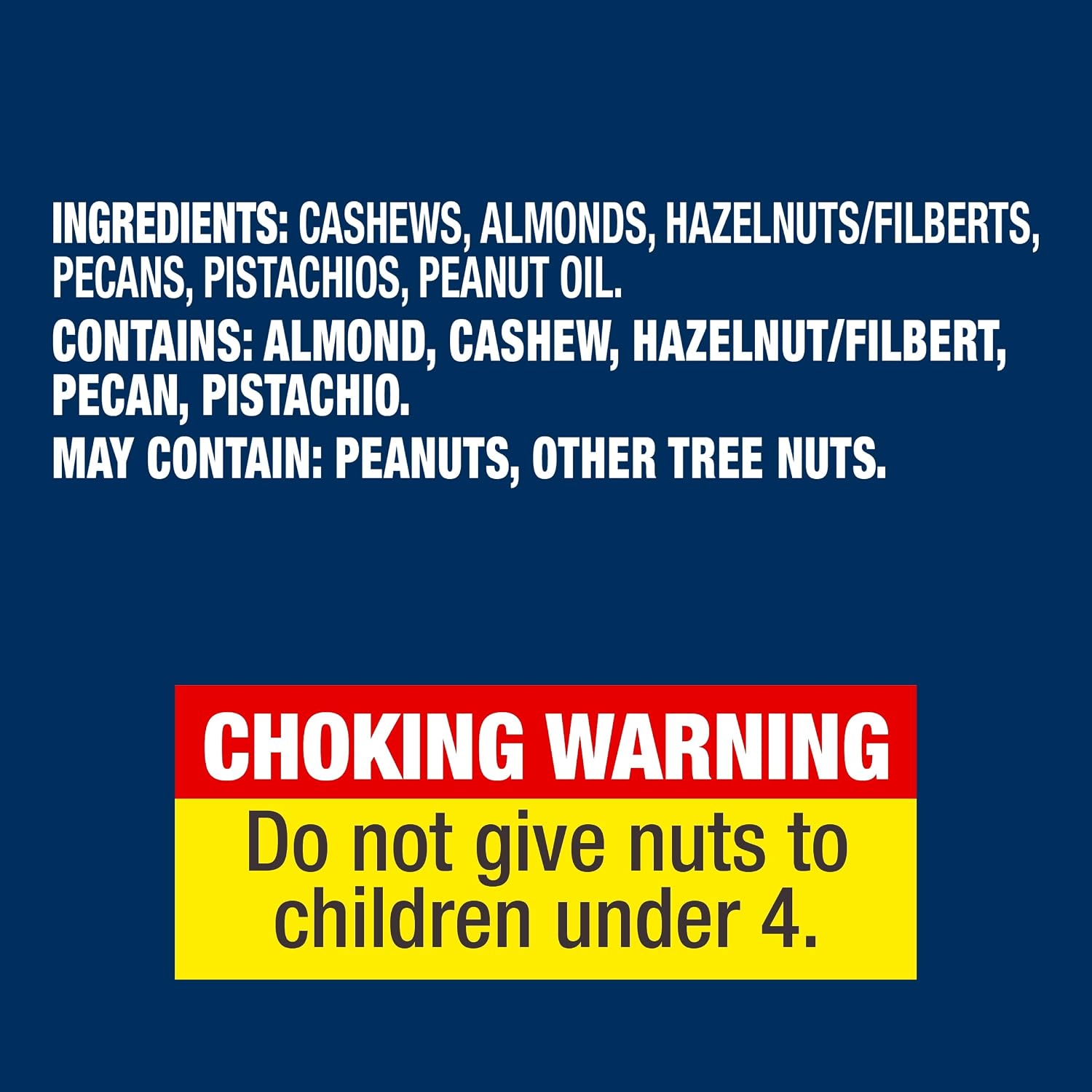
| Nut Types | Pistachios, Cashews, Almonds, Hazelnuts, Pecans | Cashews, Almonds, Pecans, Pistachios, Hazelnuts | — |
| Artificial Additives | No | — | — |
| Packaging | Resealable | — | — |
| Price | $36.38 | $19.96 | |
| See on Amazon → | See on Amazon → | See on Amazon → |
What You’re Actually Paying For (And What You Aren’t)
The first thing to understand about a national name brand like Planters is that a meaningful portion of the price covers things that have nothing to do with what’s inside the can. Advertising spend, nationwide retail distribution, liability insurance at scale, and the cost of maintaining decades of brand equity all flow into the shelf price. That’s not a cynical observation — it’s how consumer packaged goods pricing works at that scale.
Consumer Reports’ Snack Nuts Buying Guide (2025) found that national brand mixed nuts and their store-brand equivalents sourced from the same regional roasters scored comparably on freshness and flavor in blind assessments, with the primary differentiation appearing in nut-mix composition rather than roast quality. In plain terms: the nuts themselves are often processed at similar facilities, but the ratios are different.
And that ratio question is where the real analysis begins.
The cashew problem. Cashews are the most expensive nut in a typical mixed-nut blend. A bag that front-labels itself as “cashews & mixed nuts” is playing a legal and commercial sleight of hand — it can weight toward cheaper peanuts and almonds while implying cashew abundance. The Spruce Eats’ Pantry Staples Value Guide (2025) notes that savvy shoppers should always check the ingredient list order, since ingredients are listed by weight, descending. If peanuts appear first in a “mixed nut” blend, peanuts are the majority ingredient — even in a $12 Planters canister.
Planters’ standard “Deluxe Whole Cashews” line avoids this by being single-variety, but their flagship mixed-nut canisters routinely list peanuts first. Store brands often disclose the same composition — they’re not hiding anything differently — but the price better reflects what you’re actually getting.
The Three-Tier Breakdown: Numbers and Tradeoffs
This is where the comparison gets concrete. Each tier below is evaluated on the same four axes: cost per pound, typical nut composition, freshness window, and best-fit buyer profile. Understanding which tier fits your situation — and why — is more useful than a single winner declaration, because the right answer genuinely varies by use case.
National Brands: Consistency at a Premium
Approximate cost: $9–$12 per pound at retail Typical composition: Peanut-heavy, standardized blend Freshness window: 12–18 months sealed
Planters has been a reliable product for over a century, and that reliability has a real value — especially if you’re buying for resale or gifting where you need predictable quality. Reviewers across major grocery platforms consistently note that Planters delivers a neutral, approachable roast profile and dependable salt levels. The downside: you’re paying a 40–60% premium over store brands for that consistency guarantee, and you’re getting a peanut-dominant blend at a cashew-adjacent price point.
For gift programs or situations where brand-name legibility matters to the recipient, a national brand makes sense. For personal snacking or ingredient sourcing, the math rarely holds up.
PLANTERS
$36.38
In stock on Amazon
Check price on AmazonStore Brands: The Honest Value Play
Approximate cost: $5–$7 per pound at retail Typical composition: Similar to national brands, varies by retailer Freshness window: 12–18 months sealed
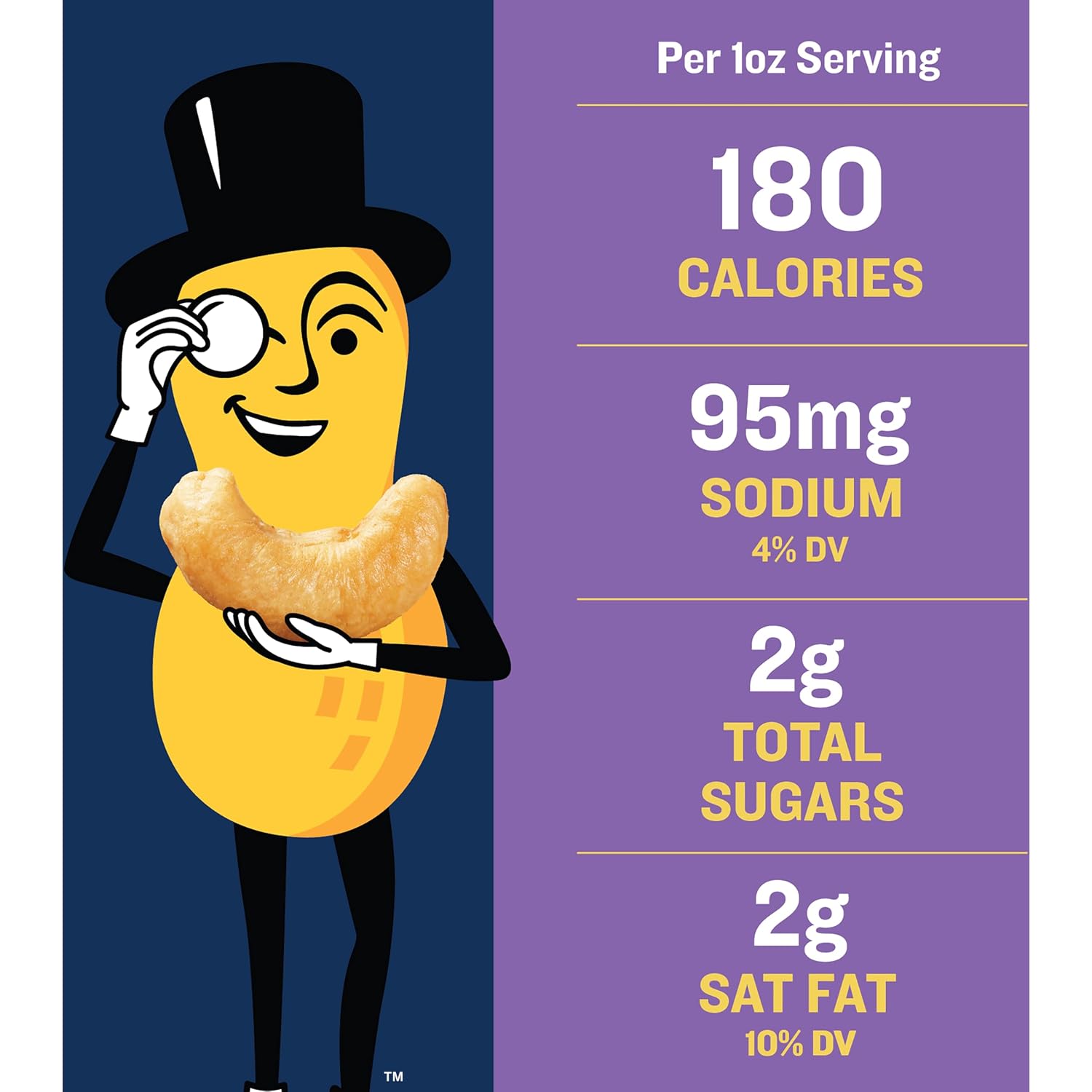
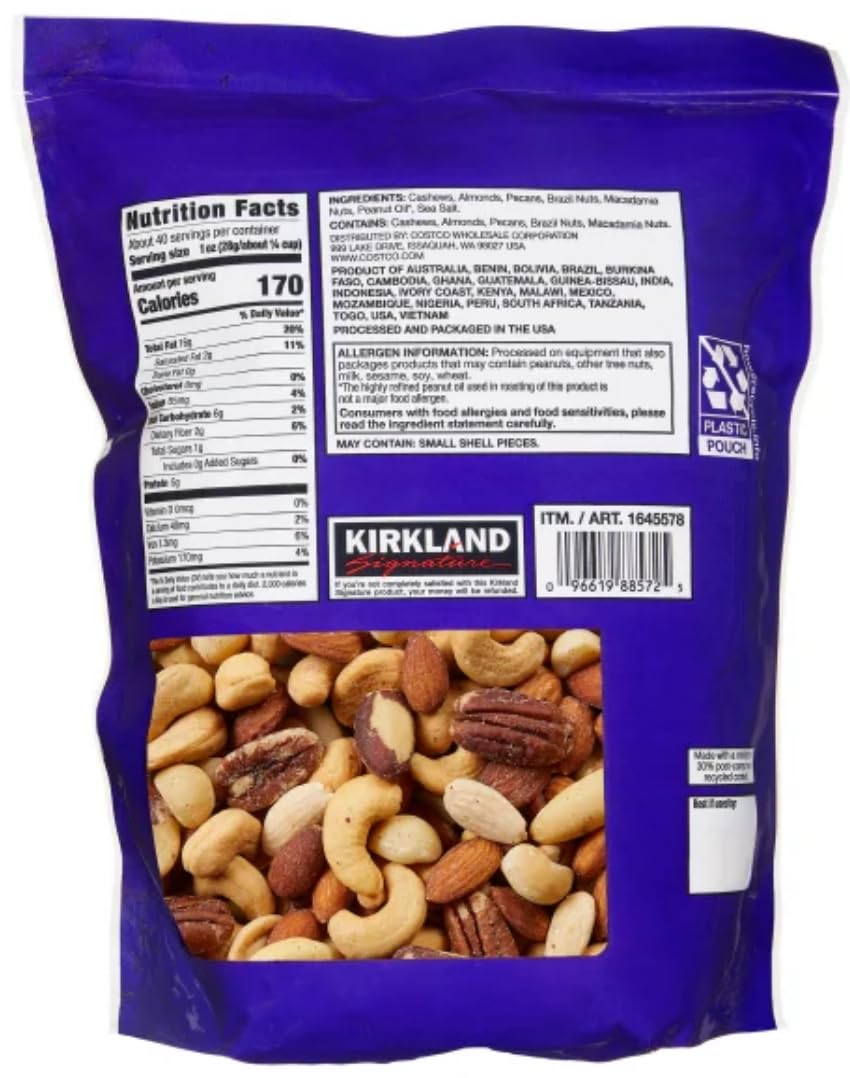
The case for store brands is strong for most home snackers and small-scale buyers. Costco’s Kirkland Signature mixed nuts have developed a loyal following among bulk snackers specifically because the blend skews cashew-heavy relative to price — a point raised repeatedly in aggregated reviewer commentary across major retail platforms. Trader Joe’s store-brand mixed nuts have similarly earned consistent praise for freshness, attributed partly to faster inventory turnover compared to national brands sitting in distribution warehouses longer.
The caveat: quality varies more across store-brand offerings than it does for national brands. A Kirkland product and a mid-tier grocery chain’s house brand are not equivalent just because neither is Planters. Read the ingredient list on every store-brand purchase. If peanuts lead the list, adjust your price-per-value expectations accordingly.
PLANTERS
$19.96
In stock on Amazon
Check price on AmazonBulk Purchasing: Highest Ceiling, Highest Risk
Approximate cost: $6–$10 per pound depending on supplier and volume Typical composition: Customizable; cashew-forward and single-origin options available Freshness window: 60–90 days after packaging is opened
Bulk nuts from specialty suppliers or warehouse clubs represent the most interesting decision point for practitioners. The ceiling is high: you can source fresher, better-composed blends — sometimes with single-origin traceable nuts — at a per-pound cost that beats retail by 20–40%. The floor is also lower: nut freshness degrades quickly once packaging is opened, and a bulk buy that sits in your storage room longer than 60–90 days starts losing the volatile aromatic compounds that make quality nuts taste premium.
Serious Eats’ 2024 analysis of how roasting and fat type affect nut flavor identifies oxidation of the unsaturated fats in nuts — particularly walnuts and pecans — as the primary driver of rancidity and off-flavors, and notes that the rate of oxidation accelerates dramatically after packaging is broken. Bulk purchasing is a volume-throughput game: it only wins if you’re moving product fast enough that storage time stays short.
Signature's
In stock on Amazon
Check price on AmazonThe Composition Question: Reading a Nut Mix Like an Operator
If you’re sourcing mixed nuts as an ingredient — for a snack mix product, a charcuterie board component, a corporate gifting program, or a retail private-label item — the composition question stops being about personal preference and becomes a margin question with a direct dollar figure attached.
The USDA Agricultural Marketing Service’s Nut Marketing Reports (2025 edition) puts average wholesale prices for major nut varieties at roughly the following ranges per pound, processed: cashews $4.50–$6.00, almonds $2.50–$4.00, pecans $4.00–$6.50, Brazil nuts $3.00–$4.50, and peanuts $0.70–$1.20. The spread between peanuts and cashews is roughly 5:1 at wholesale. A mixed-nut blend weighted 60% peanuts and 40% premium nuts represents a dramatically different cost structure than a 60/40 inversion — but both might sell at comparable consumer price points if the branding is strong enough.
For a cottage food processor or small-batch operator, your competitive advantage is not in undercutting Planters on price (you cannot, at your scale) but in offering a composition that’s visibly, immediately superior. A blend that leads with cashews and almonds, uses a declared single-origin nut variety, or specifies a roast style communicates value that a national brand simply cannot offer at mass-market economics.
Healthline’s Nutritional Overview of Mixed Nuts and Portion Sizing (updated 2025) notes that roast depth — light, medium, or dark — affects both flavor profile and micronutrient retention in meaningful ways, with lighter roasts preserving more of the heat-sensitive B vitamins and polyphenols present in raw nuts. Calling out your roast style is not just a flavor differentiation; it’s a nutritional positioning signal that resonates with health-oriented buyers.
Freshness: The Variable That Price Cannot Fully Solve
Across all three tiers, freshness is the single variable that most affects eating quality — and the one most obscured by retail packaging. A Planters canister with a “best by” date 18 months out has already been in distribution for months before you buy it. A store-brand item at a high-turnover grocer may be three months fresher. A bulk buy from a specialty supplier with documented harvest and roast dates could be fresher still — or significantly older, depending on their inventory practices.
The Spruce Eats’ Pantry Staples Value Guide recommends storing opened mixed nuts in an airtight container in a cool, dark location, and treating the “best by” date as a freshness ceiling rather than a guarantee. For operators, this means asking suppliers for roast dates, not just best-by dates — a question that immediately separates serious specialty suppliers from commodity distributors.
One practical signal requires no equipment at all: fresh, quality-roasted nuts smell like the nut itself, not like the oil. Rancid or stale nuts carry a waxy, faintly chemical smell that is immediately recognizable once you’ve trained yourself to notice it. This 10-second evaluation should precede any significant bulk purchasing decision.
The Decision Framework: Matching Tier to Use Case
Here is the honest breakdown based on the research across all tiers:
If you’re a home snacker optimizing for value: Store-brand mixed nuts from a high-turnover retailer — Trader Joe’s, Costco’s Kirkland line, or a well-regarded regional grocer — offer the best cost-per-satisfaction ratio. Read the ingredient list, confirm you’re not paying cashew prices for a peanut-dominant blend, and store properly once opened.
If you’re buying for gifting or resale where brand recognition matters: Planters remains a defensible choice at the commodity end of gifting. But the moment quality perception matters more than brand recognition — corporate gift programs, premium hampers, specialty retail — move to artisan-roasted options from producers like Germack or Fiddyment Farms. The price delta is real, but it reflects actual differences in nut sourcing, roast quality, and blend composition that discerning recipients notice.
If you’re a small-batch operator buying nuts as an ingredient: Bulk specialty sourcing from suppliers who provide roast dates and composition transparency is the right path — but only if your throughput is high enough to consume inventory within 60–90 days of opening. If you’re moving less than 20–30 pounds per month, the freshness risk of bulk purchasing may outweigh the cost savings. In that scenario, store-brand whole nuts purchased by variety rather than pre-mixed gives you composition control without the spoilage exposure.
If you’re evaluating a bulk buy for a new product launch: Run the composition math before committing. Map your target retail price, work backward from a 40–50% ingredient cost target, and price each nut variety at current wholesale rates using the USDA Agricultural Marketing Service’s Nut Marketing Reports as your reference. If the math only works with a peanut-heavy blend, either reprice the product or reframe the positioning — because a premium-priced product with a peanut-dominant composition will not survive comparison-savvy consumers for long.
Mixed nuts are a deceptively complex category — simple on the surface, full of margin leverage and quality signals once you look closely. The right choice depends less on brand loyalty and more on understanding exactly what’s in the bag, how recently it was roasted, and whether your volume justifies the purchasing format. Get those three variables right, and the brand on the label matters considerably less than you thought.