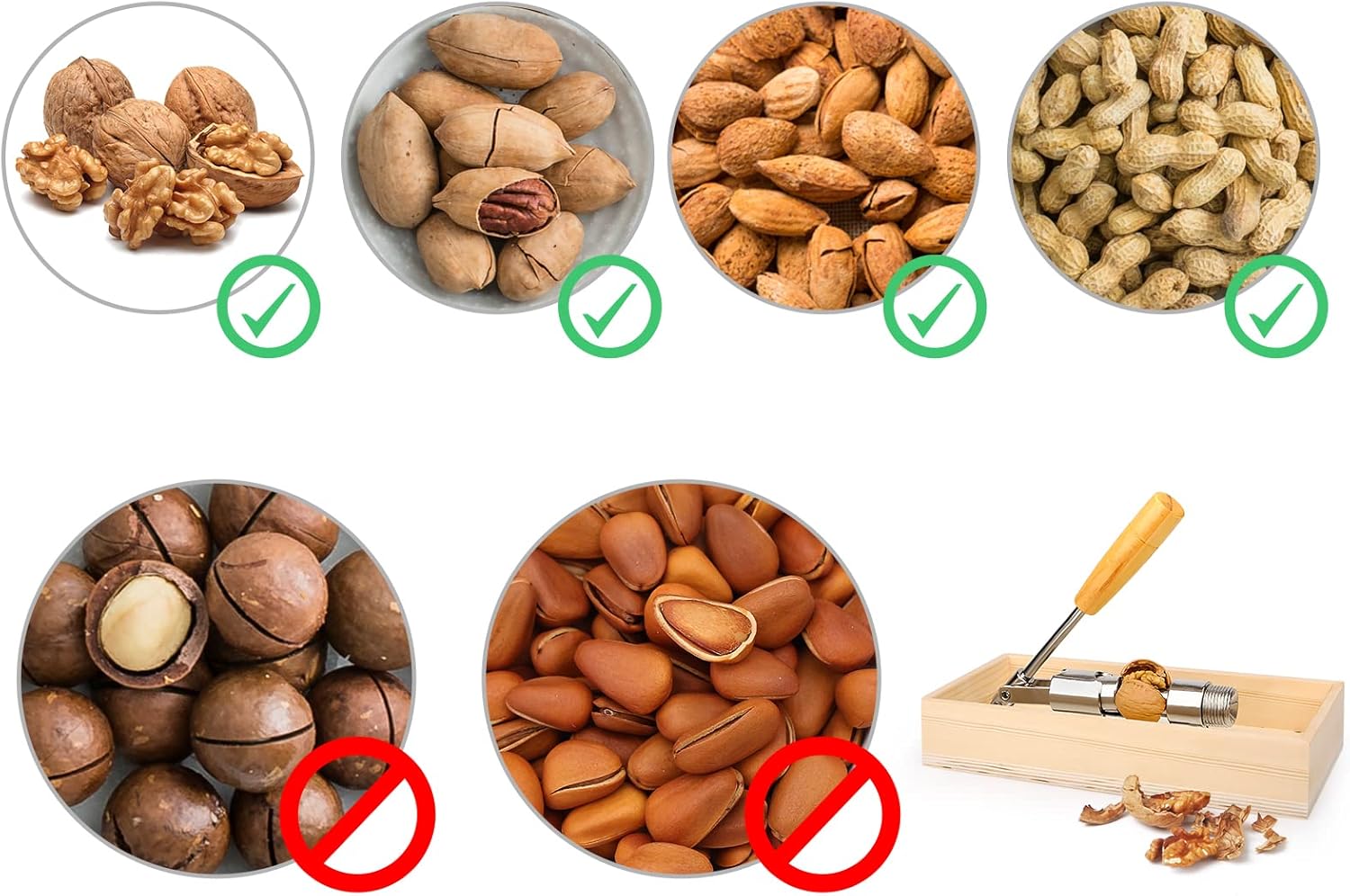
Most people buy a nutcracker the same way they buy a stapler — once, without much thought, and then blame themselves when it doesn’t work properly. But a nutcracker (a hinged, lever, or ratchet-style tool that applies mechanical force to break open a hard shell) is only one piece of a system. The pick (a slender metal probe used to extract the nutmeat from the shell’s interior chambers), the catch bowl (which collects shell fragments and keeps your workspace sane), and the cracker itself all affect each other’s usefulness. Buy them in isolation and you’ll end up with a cracker that produces shell shards your pick can’t navigate, or a bowl too shallow to contain the mess. This guide is for readers who already understand the basics and are now trying to assemble a kit that performs as a unit — whether for a well-equipped home pantry or a small food-production setup where speed and yield actually matter.
Why “Kit Thinking” Changes the Buying Decision
When you’re cracking a handful of walnuts for a salad, any lever cracker and a butter knife will eventually get you there. When you’re processing two pounds of black walnuts for a cottage food operation, or cracking pecans for a holiday gifting season, the system friction compounds fast.
The three failure modes that show up repeatedly in aggregated owner reviews are:
- Shell scatter — the cracker delivers force unevenly, sending fragments across the counter rather than into the bowl.
- Pick mismatch — the pick is too thick to navigate the interior chambers of whatever nut you’re actually cracking, so yield drops and frustration rises.
- Workflow interruption — having to stop and clear the bowl, reposition the cracker, or switch tools mid-session breaks rhythm and, at production scale, adds real time.
Serious Eats’ research on nutcrackers notes that the geometry of the cracker jaw — specifically how much surface area contacts the shell — is the primary variable in whether you get a clean crack or a shatter event. That single variable cascades into pick selection and bowl design. Understanding it upfront keeps you from buying three times.
The Cracker: Matching Mechanism to Nut Type
There are four practical cracker mechanisms worth knowing. Each has a natural home in a kit:
Lever/plier style — the classic hinged-arm design. Applies moderate, adjustable force. Works well for English walnuts, hazelnuts, and macadamias when the jaw width is adjustable. The Spruce Eats’ buying guide consistently notes that fixed-jaw lever crackers struggle with the size variance in natural nut harvests — if you’re buying bulk from Nuts.com or a farmers’ market, shell sizes will vary more than you expect.
Ratchet/screw style — a collar that tightens incrementally around the nut. Slower per nut, but delivers controlled, even force that dramatically reduces catastrophic shattering. Owners of ratchet-style crackers in long-run reviews specifically single out whole-kernel yield as the payoff: you’re more likely to get intact halves, which matters if you’re selling or gifting.
Table-mount lever (bar cracker) — a cast-iron or heavy-steel mounted cracker that uses a long lever arm for mechanical advantage. These are the workhorses of small production environments. Wirecutter’s kitchen tools coverage highlights that the mounting surface matters as much as the cracker itself: without a stable anchor, force bleeds into movement and crack quality suffers.
Spring-loaded single-hand crackers — convenient, but spec sheets put the maximum jaw pressure well below ratchet or table-mount equivalents. Fine for softer shells (almonds, pistachios with a starter gap), but reviewers consistently note they fall short on harder varieties like black walnuts or macadamias.
The tradeoff in plain terms: If you want speed and you’re working with relatively uniform nuts (like a consistent bulk purchase), a table-mount lever is the production choice. If you want maximum whole-kernel yield and you’re cracking a mixed or premium harvest where presentation matters, the ratchet mechanism wins, at the cost of time per nut.
Picks: The Part Everyone Underspecifies
The pick is where most kits quietly fail. Standard sets often include a single pick — usually a medium-gauge, pointed probe — that works adequately for English walnuts and pecans but is genuinely wrong for several other common nut types.
What to actually look for in a complete pick set:
- Thin, angled probe (sometimes called a “lobster pick” gauge) — essential for black walnuts, whose interior chambers are narrow and irregular. Food & Wine’s nutcracker coverage notes that black walnuts specifically require a narrower extraction tool than most combo sets provide.
- Broad paddle or spatula pick — useful for macadamias and large Brazilian nuts where the kernel is a single solid mass; you’re prying rather than threading.
- Standard medium pick — the general-purpose workhorse for pecans, English walnuts, hazelnuts.
- Brush or mini-scoop — underrated but genuinely useful for clearing fine shell dust from the bowl or from the cracker mechanism itself in a production session.
Stainless steel picks outlast chrome-plated zinc in long-run owner reports by a wide margin. The Spruce Eats specifically calls out handle comfort as a fatigue variable in longer cracking sessions — ergonomic handles with a slight grip texture are worth the small price premium if you’re cracking more than a pound at a sitting.
By the numbers:
| Nut type | Recommended pick gauge | Typical interior chambers |
|---|---|---|
| English walnut | Medium | 2–4 |
| Pecan | Medium–thin | 4–6 |
| Black walnut | Thin/angled | 6–10+ |
| Macadamia | Broad paddle | 1 (solid) |
| Hazelnut | Medium | 1–2 |
Bowls: Containment Is a System Feature, Not an Afterthought
The catch bowl is the component most buyers treat as decorative. It is not. Shell scatter is a real ergonomic and sanitation issue — particularly in any food-production context where shell fragments in finished product represent a quality failure.
Three bowl characteristics interact with your cracker choice:
Depth and wall angle. A shallow, wide bowl (under 3 inches deep) increases scatter from high-force lever and table-mount crackers. A deeper bowl with slightly inward-angled walls captures the scatter arc that results from a sudden crack event. Consumer Reports’ small kitchen tools evaluations note that bowl geometry interacts with the force vector of the cracker — high-impact mechanisms need more containment height.
Separation design. Some bowls include a divider, screen, or two-chamber design that lets shell fragments fall through or separate from extracted nutmeat. For any volume beyond casual snacking, this matters: sorting shell from meat by hand after the fact is slow and imprecise. Owners who process pecans in quantity consistently report that a two-bowl or divided-bowl setup — even a DIY version with a colander nested in a larger bowl — meaningfully improves yield accuracy.
Material. Stainless steel bowls are the production-context default: easy to sanitize, durable, no flavor transfer. Wood bowls are visually appealing for tabletop gifting presentations but are harder to sanitize and can absorb oils from high-fat nuts like macadamias over time, which creates off-flavor risk if the bowl is reused. For home pantry and gifting contexts, the aesthetic case for wood or ceramic is real; for any food-production use, stainless wins on hygiene grounds.
Assembling the Kit: Decision Framework by Use Case
The honest answer is that there’s no single “best” kit — there are kits that are right for specific nut types and volumes. Here’s the direct decision framework:
If you’re cracking English walnuts or pecans for home use, 1–3 lbs per session: A mid-range adjustable lever cracker (look for a jaw that opens to at least 1.75 inches), a two-piece stainless pick set (medium and thin), and any deep bowl over 4 inches will handle this cleanly. The Spruce Eats and Serious Eats both point to this tier as the one where most buyers overspend on the cracker and underspend on the pick set.
If you’re cracking mixed or premium nuts for gifting or specialty retail: Step up to a ratchet-mechanism cracker for yield quality. A four-piece pick set covering thin, medium, paddle, and brush profiles. A divided stainless bowl or the nested-colander setup. The math favors this kit when intact kernel halves have presentation or price-per-unit value.
If you’re running a small production operation (cottage food processor, specialty food startup): A table-mount cast-iron or steel bar cracker, anchored properly, with a four-piece pick set and two stainless catch bowls (one working bowl, one finished-product bowl). At this scale, session time is a cost input. Wirecutter’s kitchen tools guidance and Consumer Reports’ tool evaluations both suggest that the cleaning and maintenance protocol for the cracker mechanism deserves as much attention as the initial purchase — mineral oil on metal pivot points, proper drying, and periodic jaw-gap calibration extend tool life and maintain crack consistency.
The tradeoff you need to name before you buy: Ratchet crackers deliver better yield but are 3–5x slower per nut than a table-mount lever. If your volume is under 2 lbs per session and you sell whole kernels by the piece, ratchet wins. If you’re cracking to incorporate nut pieces into a recipe or processed product where intact halves don’t command a premium, the table-mount’s throughput advantage outweighs the yield difference.
One Purchase Mistake Worth Avoiding
The most common misfire in this category — visible across aggregated reviews on multi-piece nutcracker sets — is buying a decorative combo set (cracker + picks packaged together in a velvet-lined tin) and expecting it to function as a working kit. These sets are designed for tabletop presentation. The picks are typically chrome-plated zinc rather than stainless, the cracker jaw is usually fixed rather than adjustable, and the bowl, if included, prioritizes visual proportion over containment geometry.
For gifting or occasional casual use, that tradeoff is fine and the presentation value is real. For anyone building a working kit — even a serious home pantry setup — buy the cracker, picks, and bowl as separate components from working-tool lines rather than as a matched decorative set. The performance gap between a $28 decorative combo and a $28 set of properly specified separate components, purchased across two or three sources, is significant in long-run owner reports.
If X, Then Y: The Summary Decision Rule
- If you crack soft-to-medium shells (almonds, English walnuts, hazelnuts) at home and presentation matters → lever cracker, medium pick, deep ceramic or wood bowl.
- If you crack hard shells (black walnuts, macadamias) or prioritize whole-kernel yield → ratchet cracker, thin + paddle picks, stainless divided bowl.
- If you’re processing volume for a food business → table-mount bar cracker, full four-piece stainless pick set, two working bowls, and a written cleaning protocol.
- If you’re buying as a gift → choose the decorative set with clear eyes: it’s a presentation object, not a production tool, and that’s a legitimate thing to buy.
The kit thinking matters because every component’s performance ceiling is set by its weakest link. A great cracker paired with the wrong pick and a too-shallow bowl will underperform a moderate cracker in a well-matched system. Get the system right first, then spend up on individual components where your specific nut type and volume justify it.