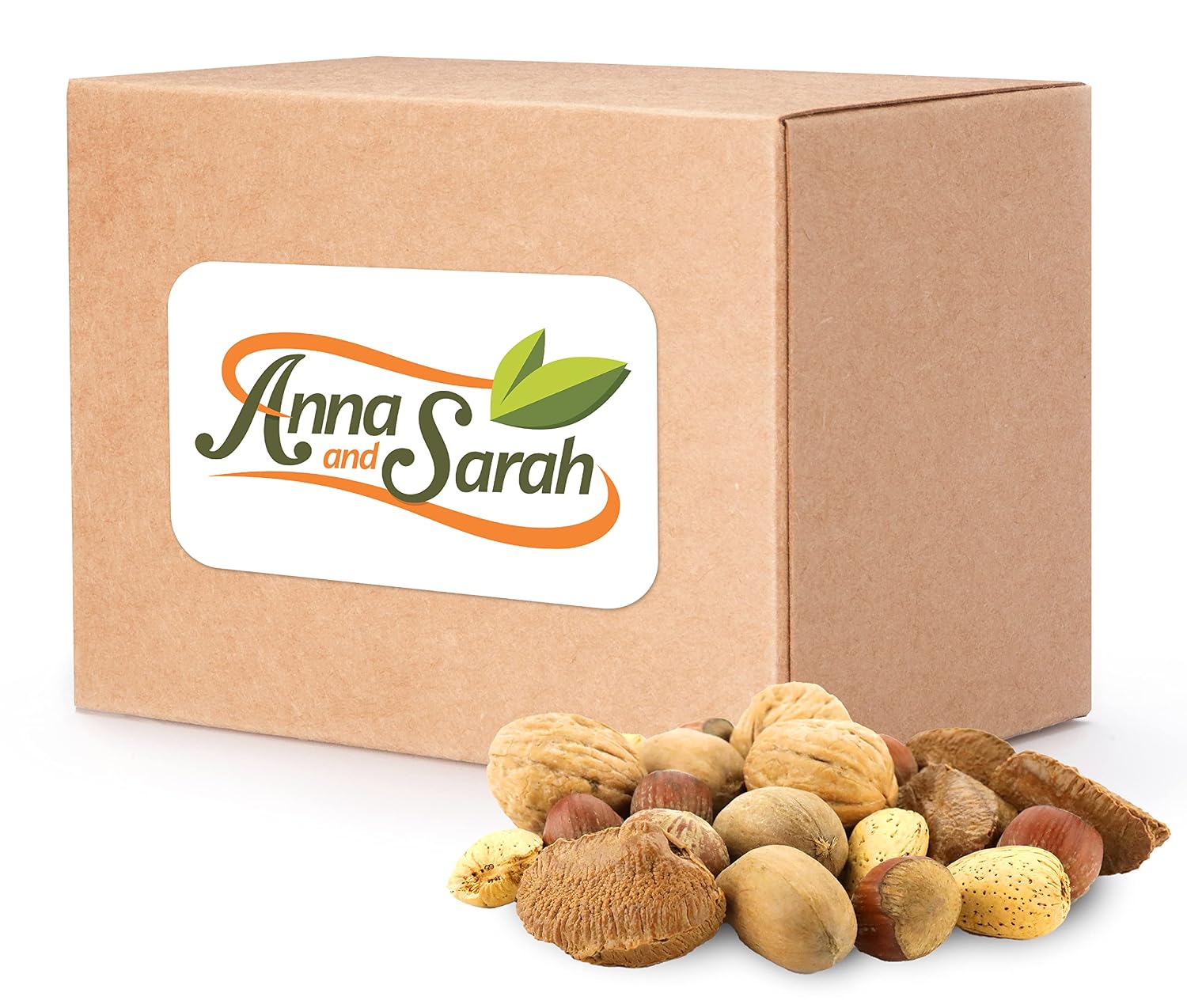
If you’ve ever bought a five-pound bag of in-shell mixed nuts and wound up with what felt like two pounds of actual eating, you already understand the central problem. “In-shell” means the hard outer casing is still on — you buy the whole nut as nature packaged it, crack it yourself, and eat the kernel inside. It’s a classic holiday-bowl staple, but it’s also a genuinely economical and freshness-preserving way to buy nuts year-round. The catch is that you’re paying for weight that includes shells you’ll throw away, and the ratio of edible kernel to total weight varies enormously by nut species. A bag that looks like a deal can quietly deliver far less food than a bag priced higher. This guide walks you through how to calculate what you’re actually getting — what the trade calls the yield ratio — how hard each nut is to crack (shell pressure), and which retail and bulk bags hold up on both dimensions as of mid-2026.
| EDITOR'S PICK[Presto Sales Mixed Nuts in Shel…](https://www.amazon.com/dp/B01NBWLC9V?tag=greenflower20-20) | Mid-tier[NUTS U.S. – Mixed Nuts In Shell…](https://www.amazon.com/dp/B081ZJQT2B?tag=greenflower20-20) | Budget pickDiamond of California In-Shell… | |
|---|---|---|---|
| Net Weight | 160 oz | — | 16 oz |
| Brazil Nuts | ✓ | ✓ | — |
| Pecans | ✓ | ✓ | — |
| Hazelnuts | ✓ | ✓ | — |
| Grade | Fancy | — | — |
| Resealable Bag | ✗ | ✓ | — |
| Price | $69.99 | $43.95 | $4.99 |
| See on Amazon → | See on Amazon → | See on Amazon → |
Why Yield Ratio Is the Only Number That Matters at Purchase
Yield ratio is simple: edible kernel weight ÷ total in-shell weight, expressed as a percentage. A nut with a 45% yield ratio means you get 0.45 lb of kernel per 1 lb of in-shell product. The rest is shell.
This matters practically because most retail bags are priced per pound of in-shell weight. Two bags at the same price per pound can deliver radically different amounts of food depending on species mix. For a home buyer grabbing a seasonal tin, this is a minor annoyance. For a cottage food operator or small batch processor buying in 25–50 lb cases, the yield ratio directly sets your ingredient cost per ounce of output — and that math compounds fast.
By the numbers — approximate yield ratios by species:
| Nut | Yield Ratio (kernel/in-shell) | Relative Shell Pressure |
|---|---|---|
| Pecans | 40–50% | Medium |
| English Walnuts | 40–45% | Medium-low |
| Almonds (in-shell) | 25–35% | High |
| Hazelnuts | 38–45% | Medium |
| Brazil Nuts | 25–30% | Very high |
| Filberts (same as hazelnuts) | 38–45% | Medium |
Figures drawn from the USDA Agricultural Research Service’s Composition of Foods database and corroborated by INC (International Nut and Dried Fruit Council) yield data published in their 2024–2025 Statistical Yearbook. Species ranges reflect varietal and moisture variation; in-shell almonds skew toward the lower end of their range when shells are thicker-walled (Nonpareil vs. Mission varieties, per the University of California Cooperative Extension’s Walnut and Almond production literature).
The practical upshot: a mixed bag weighted heavily toward Brazil nuts and almonds will yield significantly less edible product per dollar than one weighted toward pecans and walnuts. Most budget retail bags do exactly that — Brazil nuts and almonds are visually impressive, take up volume, and are cheaper for packers to source at scale.
Shell Pressure: What It Costs You in Time and Tooling
Yield ratio tells you how much you get. Shell pressure — loosely, the force required to crack a nut cleanly without destroying the kernel — tells you what it costs you to get it.
This matters more than most buyers acknowledge. If you’re cracking for personal use, high shell pressure just means a sturdier nutcracker. If you’re running a small operation where cracked-out whole kernels command a premium (for presentation in mixed platters, gift packing, or retail resale), shell pressure determines whether you’re getting marketable halves or broken meal.
English walnuts are the practitioner’s friend. Their shells are moderately hard but predictable — a quality ratchet-style cracker (or a tabletop lever cracker in the $25–$80 range) reliably yields intact halves. Serious Eats’ guide to cracking and using every kind of nut confirms the walnut’s reputation as the most forgiving in-shell nut for home and small-scale processing.
Pecans are similar in approachability, though elongated shells benefit from a dedicated pecan cracker with a narrow jaw profile rather than a generic squeeze cracker.
Hazelnuts are compact and round — a good fit for basic crackers — but the pellicle (the thin papery skin inside) can be bitter and requires blanching if you’re processing for pastry or nut butter use. The Spruce Eats notes this step explicitly in their nut preparation overview.
Brazil nuts and almonds are the hard cases, literally. Brazil nut shells are extremely dense; cracking without a lever-style or mallet-assist cracker almost always results in shattered kernels. In-shell almonds require either a purpose-built almond cracker or significant effort with a standard model. For a cottage processor comparing in-shell sourcing vs. pre-shelled almonds, the labor cost of cracking in-shell almonds at any volume almost always erases the purchase price savings unless you’re buying at commodity scale with mechanical cracking equipment.
Decision frame: If your use case is tabletop presentation — a nut bowl at a gathering, a holiday gift tin, or whole-kernel retail display — weigh shell pressure heavily in your species mix selection. If you’re cracking into broken pieces for baking or bulk production, shell pressure matters less and yield ratio dominates.
Reading a Retail Bag: What the Mix Actually Tells You
Walk through the major retail in-shell mixed nut bags available in mid-2026 and a pattern emerges quickly. Most mass-market bags from club stores and national grocery chains list species but not proportions. You’re buying a mystery yield.
A few things to look for:
1. Is the species list ordered by weight or by visual appeal? In the US, ingredient lists are required to appear in descending order by weight (per FDA labeling rules). So a bag listing “Brazil Nuts, Almonds, Walnuts, Pecans, Hazelnuts” is weighted toward the two lowest-yield species. Flip that order and the bag gets more economical fast.
2. Does the bag have a harvest year or crop year notation? This is rare at retail but signals quality-conscious sourcing. In-shell nuts that have been sitting in warehouse storage for 18+ months develop rancidity, particularly in high-oil species like walnuts and pecans. No date is not a dealbreaker, but a crop year or “packed on” date lets you calculate freshness.
3. What’s the shell condition? Cracked, chipped, or overly dirty shells suggest rough handling in transport or storage. Shell integrity matters beyond aesthetics — a compromised shell accelerates kernel oxidation. Germack, a Detroit-based specialty nut producer with over 90 years of sourcing history, is consistently cited by specialty food reviewers for maintaining shell integrity through their in-shell product lines, which tend toward the $18–$30/lb gift range.
4. What channel are you buying through? Bulk buying through distributors like Nuts.com or wholesale accounts changes the yield economics considerably. At bulk pricing, even lower-yield species like in-shell almonds can pencil out if you have a mechanical or purpose-built cracker. At retail per-pound pricing, the yield-ratio penalty on low-yield species is rarely offset by price savings.
The Practitioner’s Purchase Decision: If X, Then Y
By this point you have the framework. Here’s how to apply it cleanly to the most common decision scenarios.
If you’re buying for personal/household use and want maximum eating value per dollar: Prioritize bags where walnuts and pecans dominate the mix by weight. Avoid bags leading with Brazil nuts or in-shell almonds unless you specifically want them. A basic ratchet nutcracker handles both species cleanly. Budget: $8–$16 per pound at specialty retail or bulk online is a fair mid-2026 benchmark for quality mixed in-shell bags.
If you’re assembling a holiday gift or presentation tin: Shell pressure and visual variety matter more than pure yield. A mix with Brazil nuts (dramatic size), walnuts, pecans, and hazelnuts photographs and presents well. Accept the yield trade-off as a presentation cost. Source from producers with documented shell integrity — Germack and Fiddyment Farms (a California almond and walnut grower with direct-to-consumer gift tins in the $30–$60 range) both carry specialty food retailer endorsements for shell quality.
If you’re a cottage processor evaluating in-shell sourcing to reduce ingredient cost: Run the yield math against your current shelled-kernel price before committing. Formula: (in-shell price per lb) ÷ (yield ratio) = effective cost per lb of kernel. If your supplier quotes in-shell walnuts at $4.50/lb with a 42% yield ratio, your effective kernel cost is $4.50 ÷ 0.42 = $10.71/lb — compare that honestly to your shelled walnut price. Factor in cracking labor at your realistic hourly rate. For most cottage processors without dedicated cracking equipment, in-shell sourcing only wins when you’re at 50+ lb purchase volumes with a mechanical assist.
If you’re a small-batch commercial operator considering in-shell to control freshness: The freshness argument is real — shells are nature’s best packaging, and a crop-year-dated in-shell nut stored properly will outlast shelled equivalents in flavor integrity. INC’s statistical yearbook data supports that properly stored in-shell walnuts maintain quality 6–12 months longer than shelled equivalents under identical warehouse conditions. If your production timeline is long or your cold storage is limited, the freshness premium from in-shell sourcing can justify a higher effective kernel cost. Invest in a commercial-grade lever cracker or tabletop cracking station in the $300–$1,500 range before scaling volume.
Final Word
In-shell mixed nuts are a genuinely good value when you know what you’re buying — and a surprisingly bad one when you don’t. The species mix determines your yield. The yield determines your real cost. Shell pressure determines what equipment and labor you need to realize that value. Every bag is negotiable on those terms once you know how to read it.
The bags worth returning to are the ones that tell you what’s in them by weight, source from accountable growers, and skew toward high-yield species for everyday eating. The rest are selling you shells.