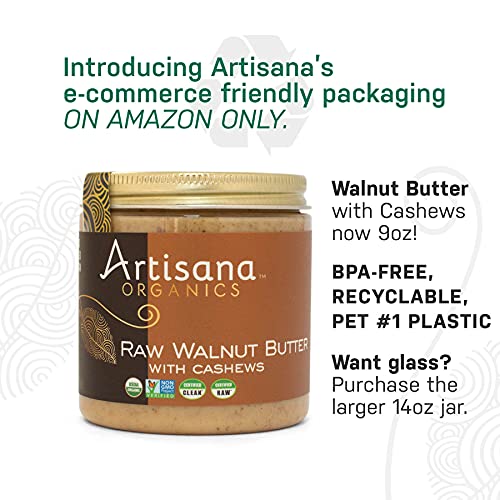
Most people who have moved past peanut and almond butter already know the basic premise: you can grind almost any nut into a spreadable paste, and the result carries that nut’s flavor, fat profile, and personality in concentrated form. Nut butter, in its simplest definition, is just whole nuts processed until the natural oils release and the texture turns smooth or chunky — no dairy, no mystery. What most guides skip over is the practical decision layer: walnut, pecan, pistachio, and macadamia butters each behave differently on a shelf, in a recipe, and on an invoice. If you’re stocking a specialty pantry, building a small-batch product, or just trying to decide whether a $22 jar of pistachio butter is worth it, this comparison is for you. We’ll walk through each variety’s flavor, nutrition, best uses, and real cost — so you can make the call with confidence.
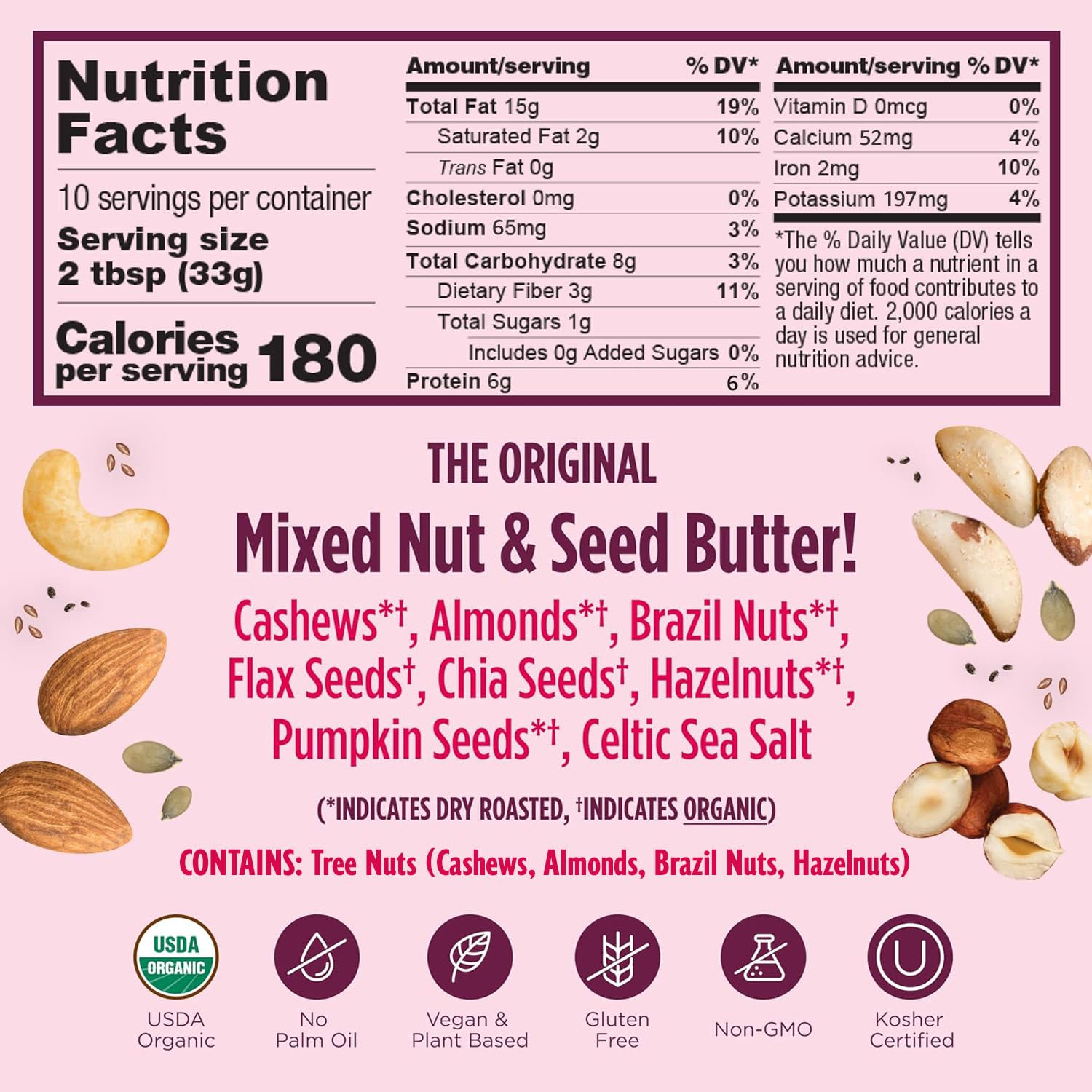
| EDITOR'S PICK[Wilderness Poets](https://www.amazon.com/dp/B00ELNP7HS?tag=greenflower20-20) | Mid-tier[Artisana](https://www.amazon.com/dp/B000WW78QA?tag=greenflower20-20) | Budget pick[NuttZo Organic Power Fuel 7 Nut…](https://www.amazon.com/dp/B01M06S98E?tag=greenflower20-20) | |
|---|---|---|---|
| Nut Type | Pistachio | Pecan | 7 Nut & Seed Blend |
| Size | 8 oz | 8 oz | 12 oz |
| Sweetened | ✗ | — | ✗ |
| Added Oil | — | — | ✗ |
| Container | Glass Jar | — | — |
| Price | $22.30 | $13.99 | $11.99 |
| See on Amazon → | See on Amazon → | See on Amazon → |
How These Four Butters Actually Differ
The clearest way to understand these four butters is to stop treating them as interchangeable premium upgrades and start thinking of each as its own ingredient category. Flavor, fat type, and stability vary enough across the group that a choice made for the wrong reason will disappoint. The sections below break each one down individually before the decision framework pulls them back together.
Walnut Butter
Walnut butter is the most assertive of the group. Raw walnut butter has a pronounced tannic bitterness — the same edge you get from eating a raw walnut straight. Roasting softens that considerably and develops a deep, almost savory richness consistently described as earthy and complex. That bitterness is not a defect; it is a feature in applications where you want contrast — stirred into miso-based sauces, used as a finishing swirl on roasted vegetables, or blended into a vinaigrette.
The fat profile is what sets walnut butter apart nutritionally: it is the only common nut butter in this group with a meaningful concentration of ALA omega-3 fatty acids. Per USDA FoodData Central, Nutrient profiles for tree nut products, 2024 release, two tablespoons of walnut butter delivers roughly 2.5 grams of ALA — more than any other nut butter compared here. Healthline, in its 2024 article “Walnut Nutrition Facts and Health Benefits,” confirms that this omega-3 content is one of the primary reasons walnut products have drawn sustained research interest.
The tradeoff is shelf life. Walnuts are high in polyunsaturated fats, which oxidize faster than the monounsaturated-dominant fats found in the other three butters. Opened walnut butter kept refrigerated typically holds quality for four to six weeks — the shortest window of the four. Nitrogen-flushed packaging and added rosemary extract (a clean-label antioxidant) are both legitimate mitigations to look for when evaluating suppliers or reading labels.
Typical retail price range (8 oz jar): $10–$18
NuttZo
$11.99
In stock on Amazon
Check price on AmazonPecan Butter
Pecan butter is the gentlest entry point in this group. Pecans are naturally sweet and low in tannins, which means pecan butter lands somewhere between almond butter and butterscotch — mellow, slightly sweet, with a buttery finish that requires almost no added sweetener to feel dessert-adjacent. It spreads cleanly, emulsifies well in baked goods, and is arguably the easiest swap for almond butter in a recipe without adjusting flavor expectations dramatically.
The tradeoff is that pecans are among the highest-fat nuts by weight, and their delicate oils oxidize faster than more stable nut fats. Serious Eats, in its aggregated review “The Best Nut Butters, Tested and Reviewed” (2024), notes that freshness at point of purchase is a meaningful quality variable across the nut butter category — a finding that applies with particular force to pecan, given its oxidation sensitivity. When sourcing for commercial use, asking a supplier for a harvest date rather than just a best-by date is worth the effort, since oil quality shifts with origin and season.
Pecans’ flavor narrative — Southern US origin, buttery finish, seasonal harvest — provides strong retail storytelling material. For a pantry buyer transitioning away from almond butter for the first time, pecan butter is the lowest-friction on-ramp in this group.
Typical retail price range (8 oz jar): $12–$20
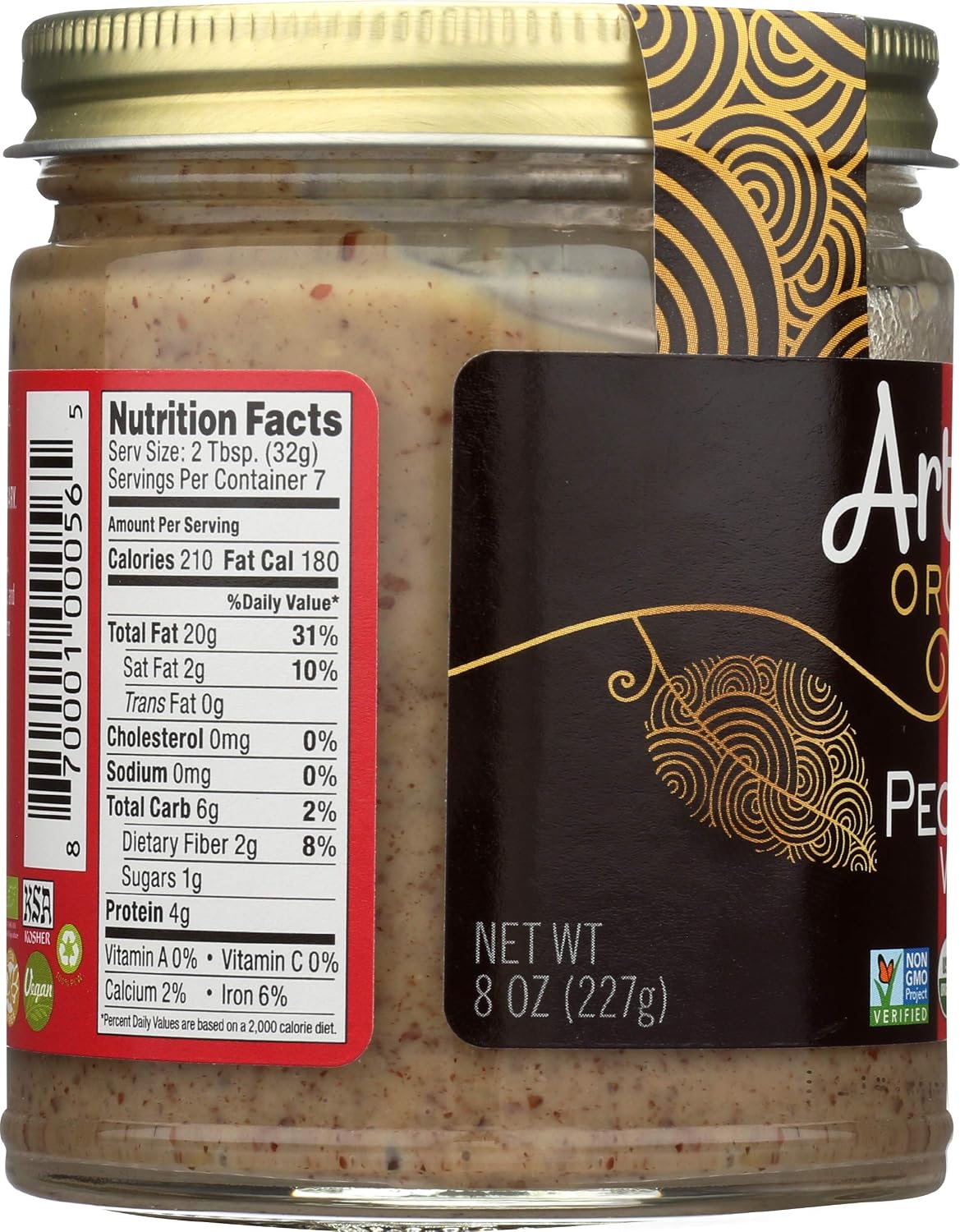
Artisana,
$13.99
In stock on Amazon
Check price on AmazonPistachio Butter
Pistachio butter is having a genuine market moment. Food and Wine, in its 2025 roundup “The Best Pistachio Butters to Buy Right Now,” notes that the category has expanded substantially, with producers now offering single-origin Sicilian and Iranian varieties alongside domestic California-grown options. The flavor is vivid and green — grassy, slightly sweet, with a floral note that photographs distinctively. That visual identity (the pale green color is natural, derived from chlorophyll in the pistachio skin) makes pistachio butter the strongest candidate for gift-tier and branded product positioning in this group.
Label literacy matters here more than with the other three butters. Pistachios in butter form are sometimes blended with neutral oils to reduce cost and improve spreadability. This is not inherently deceptive, but it changes the nutrition panel and dilutes flavor intensity. Pure single-ingredient pistachio butter will have a fat content that tracks closely with whole pistachio fat — roughly 13 grams per two-tablespoon serving, per USDA FoodData Central, Nutrient profiles for tree nut products, 2024 release. A blended product will show a different fat-type distribution and, as Serious Eats notes in “The Best Nut Butters, Tested and Reviewed” (2024), a noticeably less concentrated flavor. For a premium retail or gifting SKU, single-ingredient sourcing is non-negotiable. For a pastry application where the pistachio flavor will be buried under other ingredients, a blended product may be a rational cost decision.
The per-ounce cost floor is persistently high — typically two to three times that of walnut or pecan butter — because pistachios are expensive at commodity level regardless of processing.
Typical retail price range (8 oz jar): $18–$32
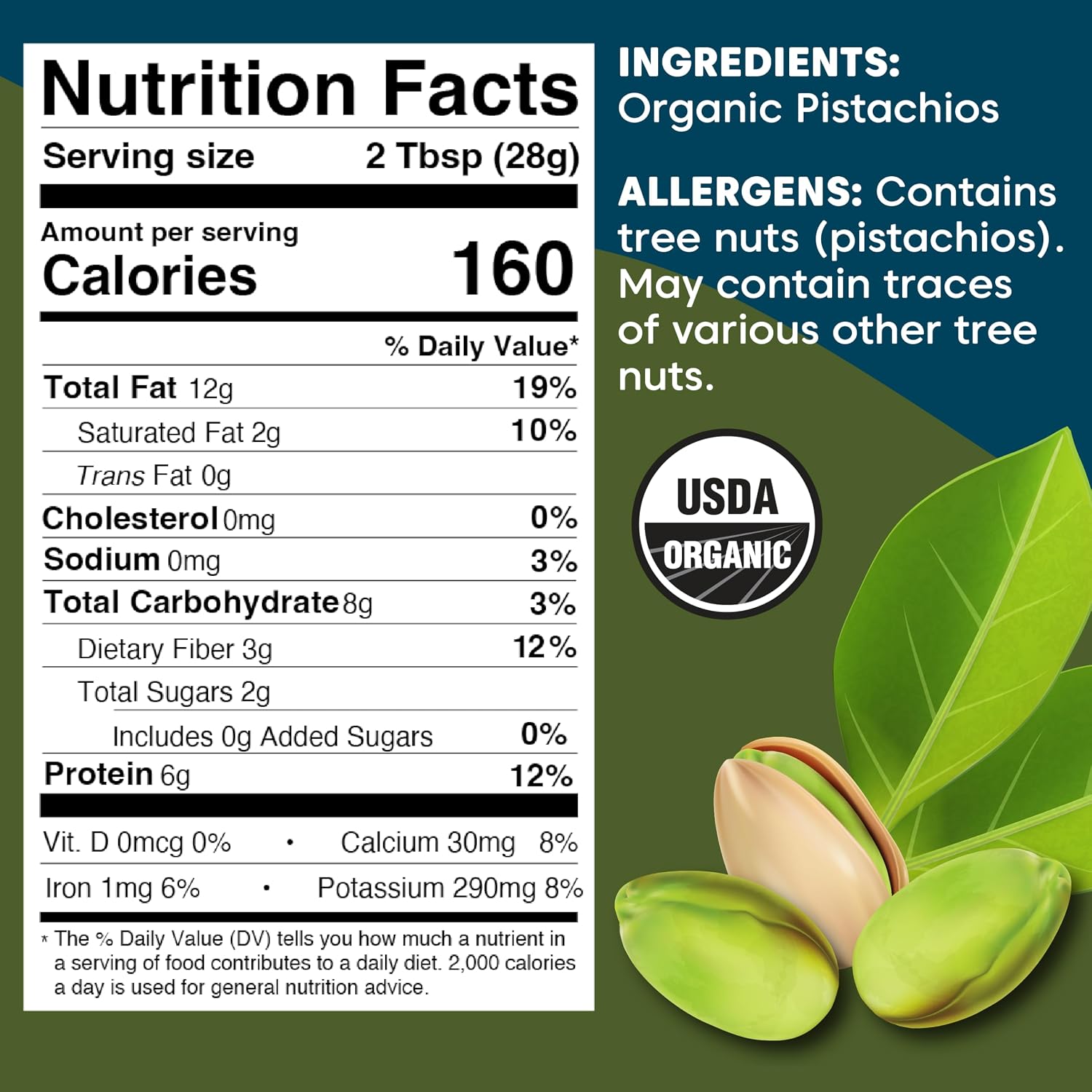
Wilderness
$22.30
In stock on Amazon
Check price on AmazonMacadamia Butter: The Neutral-Fat Outlier
Macadamia butter is the richest and mildest of the four, and it warrants its own section because its use logic is categorically different from the others.
Bon Appétit, in its 2024 feature “Why Macadamia Nut Butter Deserves a Spot in Your Pantry,” describes the texture as closer to a thick cream than a traditional nut butter — an accurate characterization. The fat content is extremely high (roughly 21–22 grams per two-tablespoon serving per USDA FoodData Central, Nutrient profiles for tree nut products, 2024 release), predominantly monounsaturated oleic acid, which is the same dominant fat found in olive oil. That fat profile gives macadamia butter two meaningful properties: excellent oxidative stability and an almost completely neutral flavor.
Macadamia butter disappears into smoothies, sauces, and baked goods without announcing itself, which is either the point or the problem depending on what you’re trying to achieve. For keto and high-fat dietary applications, it has developed a loyal following precisely because it adds concentrated fat calories without altering flavor. For operators building a flavor-forward product, paying a macadamia premium for subtlety requires a deliberate rationale.
On the stability side, opened macadamia butter kept refrigerated typically holds quality for six to eight weeks — the longest window of the four, by a meaningful margin. For a small-batch product developer, that forgiving shelf life is a real operational advantage compared to walnut or pecan.
Typical retail price range (8 oz jar): $14–$26
Wilderness
$22.30
In stock on Amazon
Check price on AmazonBy the Numbers: Quick Reference Comparison
| Butter | Approx. ALA Omega-3 (per 2 tbsp) | Relative Sweetness | Typical Retail Price (8 oz) | Shelf Life (opened, refrigerated) | Tier |
|---|---|---|---|---|---|
| Walnut | ~2.5g | Low / Bitter | $10–$18 | 4–6 weeks | NuttZo — $11.99 |
| Pecan | ~0.3g | High | $12–$20 | 3–5 weeks | Artisana, — $13.99 |
| Pistachio | Trace | Medium | $18–$32 | 6–8 weeks | Wilderness — $22.30 |
| Macadamia | Trace | Very Low / Neutral | $14–$26 | 6–8 weeks | Wilderness — $22.30 |
Prices reflect specialty retail and direct-to-consumer channels as of mid-2026. Bulk operator pricing will differ by volume tier. Nutritional data per USDA FoodData Central, Nutrient profiles for tree nut products, 2024 release.
Decision Framework: Which Butter for Which Use Case
This is where the comparison becomes actionable. Each of the four butters has a defensible lane — the question is which one fits the specific job you’re hiring it for.
If your priority is nutritional differentiation — specifically omega-3 content as a label claim or a selling point — walnut butter is the only defensible choice in this group. The ALA concentration is meaningful and well-documented in USDA FoodData Central, Nutrient profiles for tree nut products, 2024 release, and no other butter here approaches it. Accept the shorter shelf life as the cost of that differentiation.
If you’re developing a gift product or premium retail SKU where visual identity carries marketing weight — something that photographs well, reads as distinctive, and commands $18–$32 per jar without requiring explanation — pistachio butter is the correct category. The green color and flavor intensity do the marketing work. Verify single-ingredient sourcing, and specify Sicilian or California origin on the label if your supply chain allows it. Food and Wine’s 2025 pistachio butter roundup, “The Best Pistachio Butters to Buy Right Now,” identifies origin specificity as a meaningful premium signal in specialty food retail.
If you’re building a baking or pastry application where nut butter is a background player — a fat source and binder, not a featured flavor — macadamia butter’s neutrality and oxidative stability make it the rational formulation choice. Bon Appétit’s framing in “Why Macadamia Nut Butter Deserves a Spot in Your Pantry” (2024) positions macadamia butter as a blank-canvas ingredient, which is precisely the right framing for a formulation context where the butter needs to contribute richness without competing with other flavors.
If you’re targeting the everyday-premium pantry buyer who is moving off almond butter for the first time — someone who wants complexity without challenge — pecan butter is the on-ramp. The natural sweetness and mildness lower the barrier to adoption, the flavor narrative is strong, and it pairs intuitively with toast, oatmeal, dark chocolate, and baked goods. The shelf-life caveat applies, but for a retail consumer finishing a jar in three to four weeks, it is a non-issue.
Sourcing Notes for Commercial Operators
For small-batch producers and specialty retailers, a few supply-chain variables are worth addressing explicitly before committing to a SKU.
Walnut and pecan butters require nitrogen-flushed or vacuum-sealed packaging and cold-chain integrity from processor to shelf. Any supplier who cannot confirm their packaging format for these two butters is a risk. For walnut butter specifically, raw versus roasted is a formulation decision that affects both flavor and shelf life — roasting reduces surface moisture and slows oxidation modestly, which matters if your distribution timeline extends beyond four weeks.
Pistachio butter pricing is the hardest to compress at scale. Even at bulk volume, pistachio commodity pricing sets a cost floor well above the other three. Margin math that works for a $28 retail price point may not survive a commodity spike season. Building in a pricing-review clause with your supplier at contract time is advisable.
Macadamia butter sourcing involves origin decisions with real flavor and price consequences. Hawaii-grown macadamias command a premium over imported Australian or South African product. For a positioned premium SKU, Hawaii origin is a narrative asset. For a cost-sensitive formulation application, imported macadamia butter from a reputable processor is a defensible choice and will land at a meaningfully lower cost per pound.
The bottom line: none of these four butters is a direct substitute for another, and that is the point. Walnut for nutrition, pistachio for identity, macadamia for versatility, pecan for accessibility. The comparison only resolves once you know what job you’re hiring the butter to do.