You open a tin of mixed nuts you bought six weeks ago, pop one in your mouth, and something is just off — a faint bitterness, a paint-like aftertaste that lingers. That’s rancidity: a chemical process (called oxidation) where the healthy fats inside a nut react with oxygen and break down into compounds that taste and smell unpleasant. It’s not a food-safety crisis like mold, but it is a quality crisis — and once it starts, there’s no reversing it. The good news is that rancidity is almost entirely preventable if you control four variables: oxygen exposure, light, heat, and moisture. This guide walks you through exactly how to do that, which container formats actually deliver on the “airtight” promise, and how to match your storage strategy to the volume and value of your nuts — whether you’re managing a home pantry rotation or sourcing bulk stock for a small food operation.
| EDITOR'S PICK[DWËLLZA KITCHEN Set of 6 Mini A…](https://www.amazon.com/dp/B08KGXM179?tag=greenflower20-20) | Mid-tier[CHEFSTORY Airtight Food Storage…](https://www.amazon.com/dp/B08NDKDJC5?tag=greenflower20-20) | Budget pick[Rubbermaid Brilliance Pantry Ai…](https://www.amazon.com/dp/B0FD7DHRVX?tag=greenflower20-20) | |
|---|---|---|---|
| Count | 6 | 8 | 1 |
| Material | Clear Plastic | Plastic | —— |
| Capacity | —— | —— | 7.8 Cup |
| BPA-Free | ✓ | —— | ✓ |
| Dishwasher Safe | —— | —— | ✓ |
| Price | $35.89 | $22.30 | $10.49 |
| See on Amazon → | See on Amazon → | See on Amazon → |
Why “Airtight” Is More Than a Marketing Word
Here’s the frustrating reality: almost every container on the market claims to be airtight, but the engineering behind that claim varies dramatically. True airtight means the container maintains a seal that resists both oxygen ingress and moisture vapor — two different threats that require two different gasket designs.
Oxygen drives lipid oxidation, which is the primary rancidity pathway for high-fat nuts like walnuts, pecans, pine nuts, and macadamias. Moisture (even ambient humidity) accelerates the process by creating a microenvironment that activates enzymes and encourages mold on the nut’s surface. Light — particularly UV — acts as a catalyst, speeding oxidation even when oxygen levels are low.
The practical implication: a glass jar with a standard metal twist lid is not meaningfully airtight. The thread seal is loose enough that oxygen exchanges freely over days. A flip-top Weck jar with a rubber gasket is substantially better. A vacuum-sealed bag or a jar with a dedicated silicone gasket and a locking bail is better still. And a nitrogen-flushed, heat-sealed bag — the format that artisan producers like Germack and Fiddyment Farms use for their shelf-stable gift tins — is the gold standard for long-term preservation.
Per the University of California Cooperative Extension’s guidance on storing nuts and seeds at home, walnuts stored at room temperature in a loosely closed bag can go rancid in as little as one month, while the same walnuts in a vacuum-sealed container in a refrigerator can remain stable for six to twelve months. That’s a 6–12x difference in usable shelf life — meaningful at any volume.
The Four Container Formats, Compared Honestly
1. Glass Jars with Silicone-Gasketed Lids
Best for: daily-use pantry quantities (under 2 lbs), nuts you cycle through weekly.
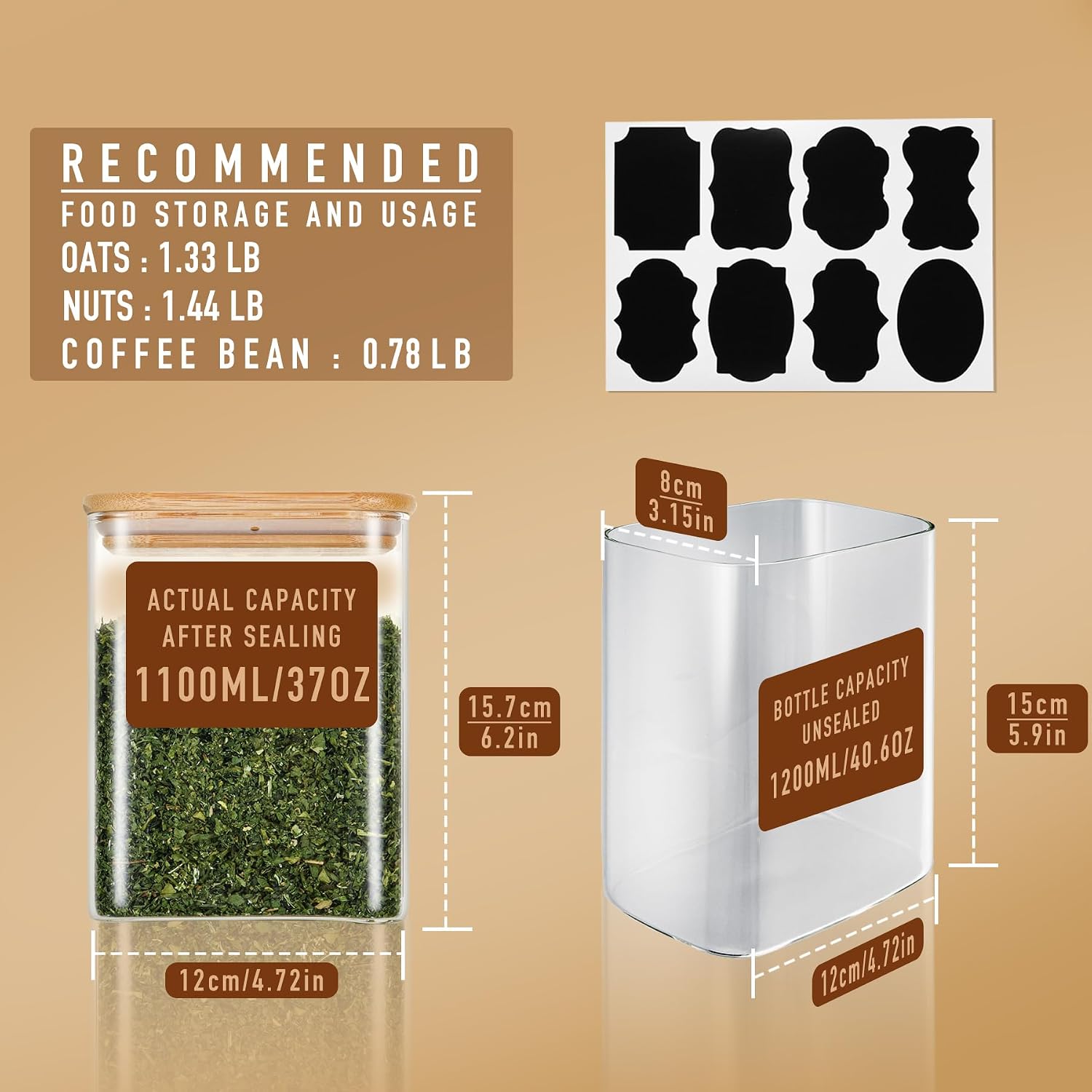
Glass is inert — it won’t leach flavor compounds or absorb oils the way some plastics do, which matters especially for high-fat varieties like macadamias and pine nuts. The critical variable is the lid. Standard canning lids (Ball, Kerr) create a reasonable seal when new and used with a fresh rubber band, but they’re designed for vacuum processing, not passive airtight storage.
Weck jars with their separate rubber gaskets and spring clips, or mason jars fitted with aftermarket silicone-gasketed bail lids, perform measurably better in consumer testing. Consumer Reports’ food storage container ratings note that silicone gasket designs consistently outperform thread-seal designs on oxygen retention over 30-day test periods.
Tradeoff to name explicitly: Glass is heavy, breaks, and offers zero UV protection unless you choose amber or dark glass. If your nuts sit on an open shelf near a window, glass is working against you on the light variable even if the seal is perfect. Pair glass with a cabinet or pantry drawer, and this format punches well above its price.
Price tier: $3–$18 per jar at retail. Reusable indefinitely if the gasket is replaced annually.
2. Vacuum-Seal Bags and Canisters
Best for: bulk buying, batch processing, longer holds (1–6 months at room temperature, 6–18 months frozen).
Vacuum sealing physically removes most of the oxygen from the container before sealing — it’s the most effective passive method for home and small-batch operators. The Spruce Eats’ overview of nut shelf life confirms that vacuum-sealed storage roughly doubles to triples shelf life compared to ambient-air storage at the same temperature.
For home curators buying in bulk from Nuts.com or Thrive Market, a basic vacuum sealer ($40–$120) paired with resealable bags is one of the highest-ROI kitchen tools available on a pure food-waste-reduction basis. For small food businesses, chamber vacuum sealers ($500–$2,500) handle larger volumes and can seal liquids — relevant if you’re packaging nut butters or oil-marinated roasted nuts.
Tradeoff: Bags are single-use or limited-reuse, creating ongoing consumable cost. Rigid vacuum canisters solve the reuse problem but don’t achieve the same vacuum depth as bags processed through a suction sealer.
The math, briefly:
By the numbers
- Walnuts bought in bulk: ~$9/lb
- Average loss to rancidity without vacuum sealing (estimated at ~20% of a 5 lb batch held 8 weeks at room temp): ~$9
- Cost of vacuum bag consumables for a 5 lb batch: ~$0.40
- Net savings per batch: ~$8.60
Even at the entry level, the math favors vacuum sealing on any nut you’re buying in quantity.
3. Tin and Opaque Canisters with Pressure-Fit Lids
Best for: gift-grade presentation, short-to-medium holds (2–8 weeks), dry environments.
This is the format you see from premium producers — the Germack gift tins, the Fiddyment Farms holiday sets. The tin itself is the UV barrier (a major advantage over glass on open shelving), and a well-manufactured pressure-fit lid with an interior gasket achieves a reasonable seal. The limitation is that once opened, a pressure-fit tin doesn’t reseal to its original integrity. Most artisan producers address this by nitrogen-flushing before initial seal — but that’s a one-time benefit that evaporates on first opening.
For home curators who receive premium nuts in gift tins, the practical advice is: once opened, transfer to a gasketed glass or vacuum container. Don’t rely on the original tin for ongoing storage.
For food entrepreneurs who sell nuts at farmers markets or through retail channels, tins are a premium presentation format with real marketing value — but they are not a long-term freshness solution unless you’re investing in nitrogen flush equipment.
4. Mylar Bags with Oxygen Absorbers
Best for: long-term storage (6 months to 2+ years), prepper-scale or small-commercial bulk holds.
Mylar (a form of polyester film with a metallic barrier layer) is nearly impermeable to both oxygen and moisture vapor — a significant step above standard food-grade plastic bags. Combined with an oxygen absorber packet (iron-based compounds that chemically scavenge residual O2 from the sealed bag), Mylar storage can extend walnut shelf life to 2 years or longer at room temperature, per University of California Cooperative Extension data on long-term nut storage.
This format is overkill for a home pantry that cycles nuts regularly. It’s the right call for anyone buying a season’s worth of heirloom pecans from a single farm, running a food storage program, or holding raw bulk stock for a small processing operation.
Tradeoff: Mylar bags are not resealable once opened. Plan in portion sizes you’ll use in a single session, or accept re-bagging into a secondary container after opening.
Temperature and Light: The Variables Containers Can’t Solve Alone
Even the best container can’t overcome a bad environment. Serious Eats’ research on nut storage is direct on this point: temperature is the single most powerful lever for extending nut freshness. Every 18°F (10°C) drop in storage temperature roughly doubles the shelf life of high-fat nuts.
Practical hierarchy:
- Room temperature pantry (65–75°F): suitable for 2–6 weeks on most nuts in a sealed container; 1–3 months for lower-fat varieties like almonds and hazelnuts.
- Refrigerator (34–40°F): extends shelf life to 6–12 months for most nuts. The cold also slows enzymatic activity and suppresses moisture-related spoilage.
- Freezer (0°F or below): the best long-term option. Properly sealed nuts — especially in vacuum bags or Mylar — hold quality for 1–2 years in the freezer with minimal sensory degradation. Healthline’s overview of nut rancidity confirms that freezing essentially pauses oxidation.
One nuance practitioners often miss: thawing matters. Bringing a sealed bag from freezer to room temperature without opening it prevents condensation from forming on the nut surface (condensation = moisture = accelerated spoilage). Let the sealed container reach room temperature before opening. This takes 30–60 minutes for a quart-sized bag and is worth the wait.
Light is the other non-container variable. UV exposure catalyzes oxidation even in well-sealed containers if the container is translucent. Opaque storage — tins, Mylar, dark glass, or any container kept inside a cabinet — is always preferable to transparent glass or plastic on an open, lit shelf.
Decision Rules: If X, Then Y
If you’re a home pantry curator cycling through 1–2 lbs of mixed nuts per month, the move is gasketed glass jars in a cool, dark cabinet. You’re turning inventory fast enough that vacuum sealing adds complexity without proportional benefit. Prioritize the lid quality over the jar brand.
If you’re buying bulk (5+ lbs at a time) to save on per-pound cost, vacuum sealing pays for itself in the first or second batch in prevented waste. A basic suction sealer plus bags is the minimum. Portion into 1-lb bags before sealing so you’re not exposing the whole batch every time you need a handful.
If you’re holding premium or heirloom varieties — single-origin pecans, Marcona almonds, or anything over $20/lb — always freeze them, even if you think you’ll use them “soon.” Freezer storage is cheap insurance on expensive product.
If you’re a small food operator or cottage processor evaluating storage for raw bulk stock, Mylar plus oxygen absorbers plus freezer is the professional answer. The marginal cost per pound stored is negligible; the cost of a rancid batch is not.
If you received a premium gift tin and want to preserve what’s inside past the two-week mark after opening, transfer immediately to a vacuum bag or gasketed jar and refrigerate. The original tin has done its job.
Rancidity is a solved problem — it just requires matching the container format and storage environment to the volume and value of what you’re keeping. The containers exist at every price point. The rules don’t change based on budget; they scale. Get the seal right, get the temperature right, block the light, and your nuts will taste exactly as good on week eight as they did on day one.